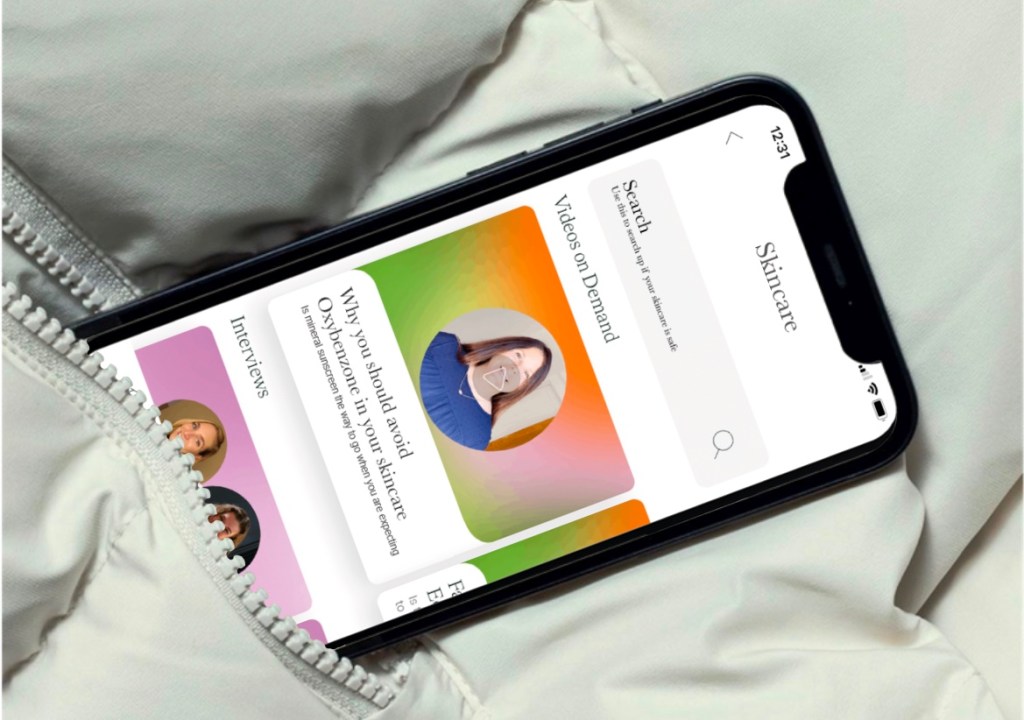
Disclaimer: This project was created as part of a university research assignment and is intended for educational purposes only. It is not a real-world or commercial piece and was not developed for sale or public use.
The dangers of oxybenzone
Oxybenzone is a chemical found in sunscreen. It has been found to have extremely negative effects not just in humans but the environment. It has now been banned in many places around the world including Mexico, Australia and Hawaii.
Problem
I set myself the challenge of developing a bold and thought-provoking solution for Cardiff—one that is both affirmative and disruptive in nature.
Oxybenzone-based sunscreens have been banned in several countries due to their harmful impact on coral reefs and marine life. However, this chemical also poses risks to human health. Despite its known effects, oxybenzone remains widely used in skincare products in the UK, largely due to the absence of coral reefs in our local ecosystems.
Through my research, I discovered that one of the groups most at risk from oxybenzone exposure is pregnant women, as it has been linked to potential harm to the developing foetus. With this project, my aim was to raise public awareness of what oxybenzone is, its potential dangers, and how to identify and avoid it in skincare products.
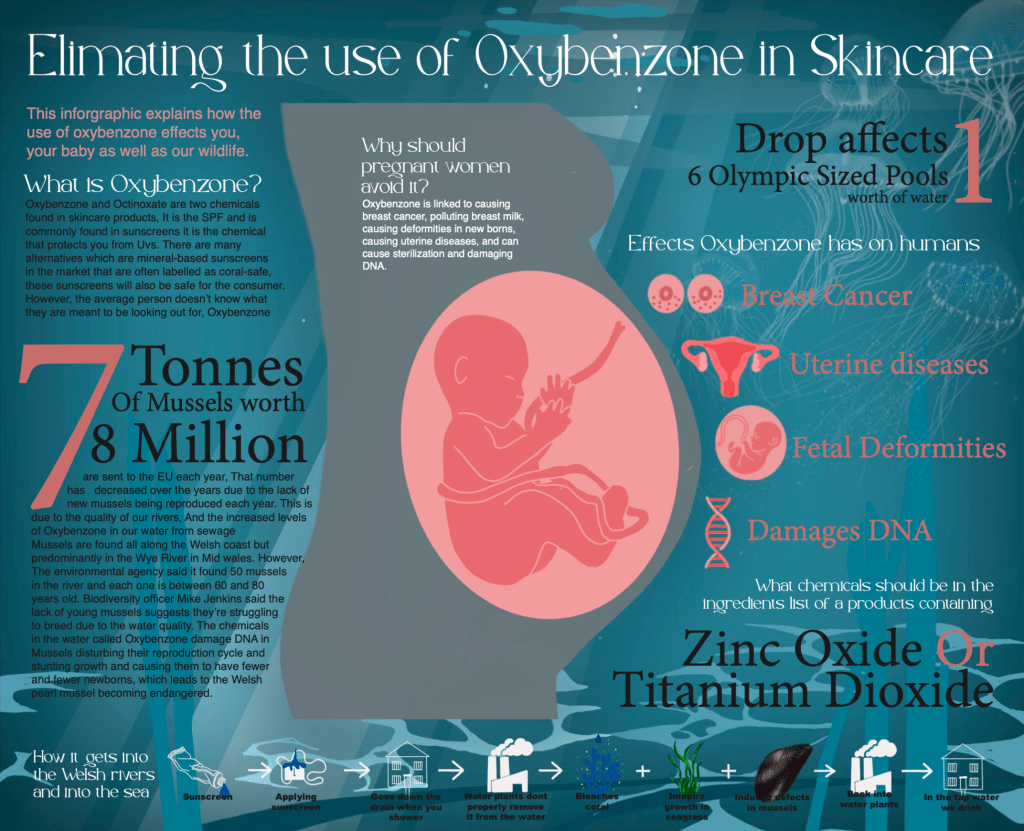
Above is an infographic I designed. This infographic highlights the harmful impact of oxybenzone not only on women’s health, but also on our economy and the natural world. Oxybenzone affects far more than just mussels—it poses a threat to all forms of wildlife by damaging DNA over time, which can lead to sterilisation of offspring. This disruption in reproduction gradually contributes to a decline in both animal and plant populations.
“Analysis of human exposure levels to oxybenzone from sunscreen use, under normal conditions, demonstrates that enough chemical can cross into the mother’s blood making it available to the fetus at high enough levels that can indeed inhibit migration of neural crest cells during critical embryonic development..”
Joseph C DiNardo, Craig A Downs
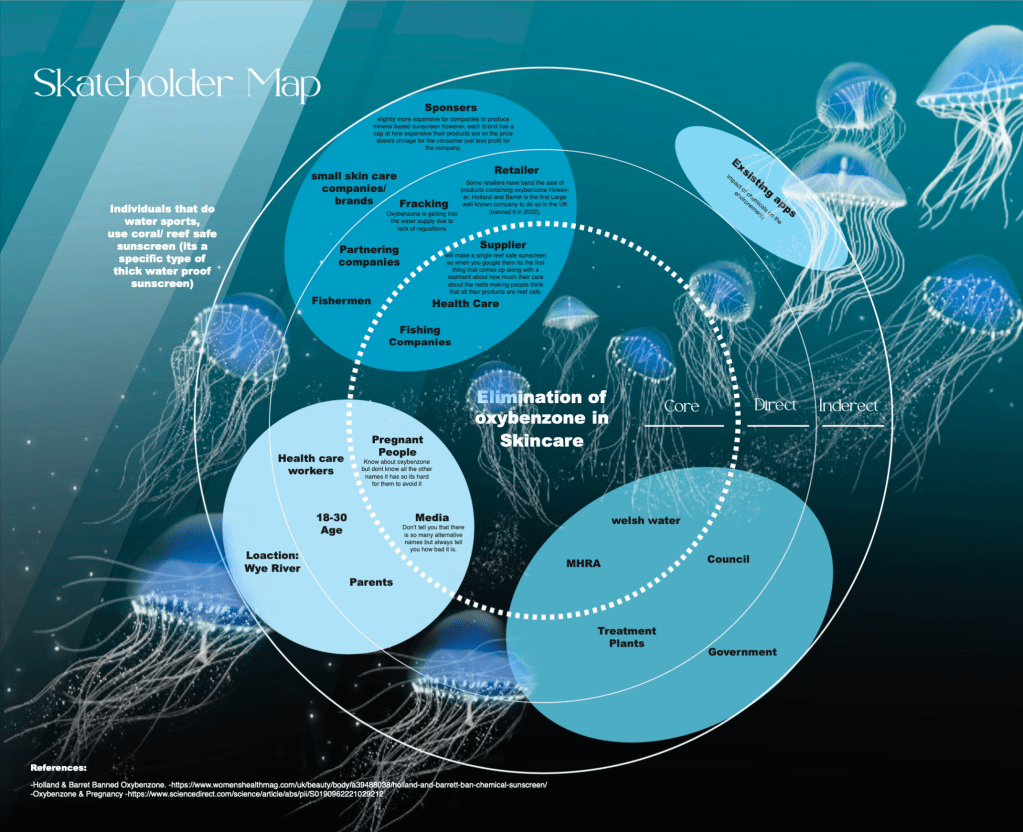
This is my skate holder map. It shows the people, animals and companies most to least effected by oxybenzone. It shows how oxybenzone is getting into our water due to welsh waters not having to remove oxybenzone from the water they release back into our rivers and oceans (no fault of their own as they have no regulations or laws to abide by). It then shows how due to this fracking and welsh water allowing this chemical to enter the water it means that it then returns to our own water supply when we are drinking through our taps increasing our intake of oxybenzone.
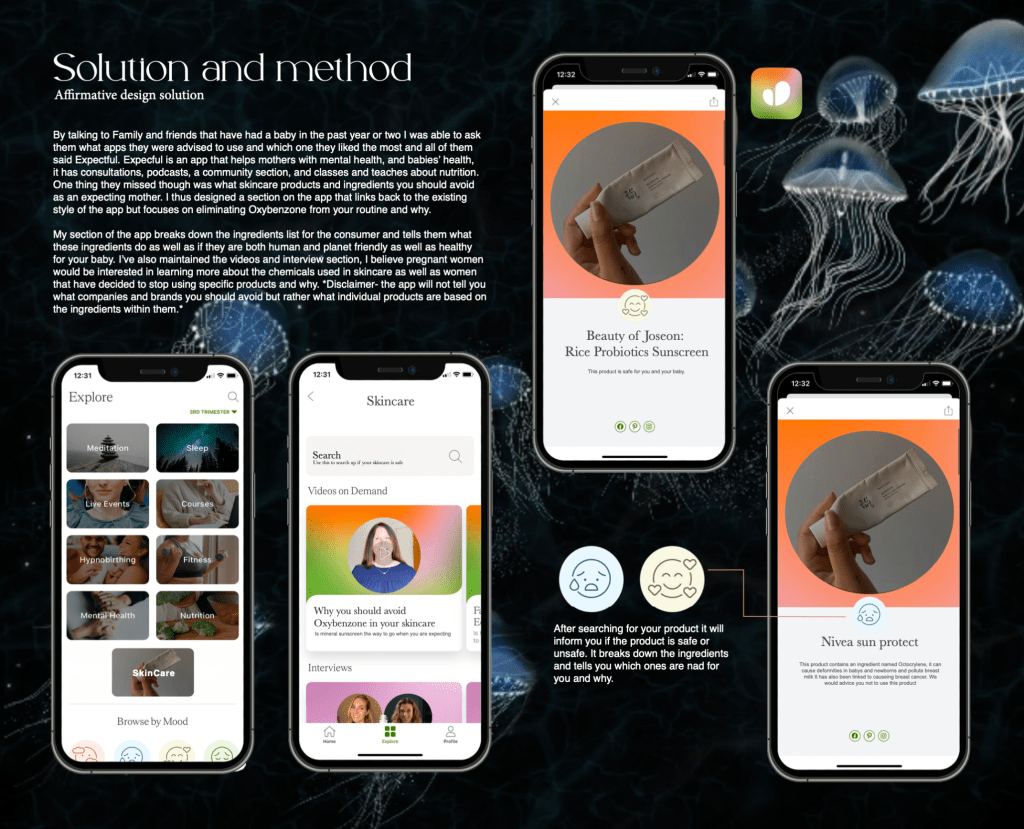
Solution A- Targeted towards pregnant women
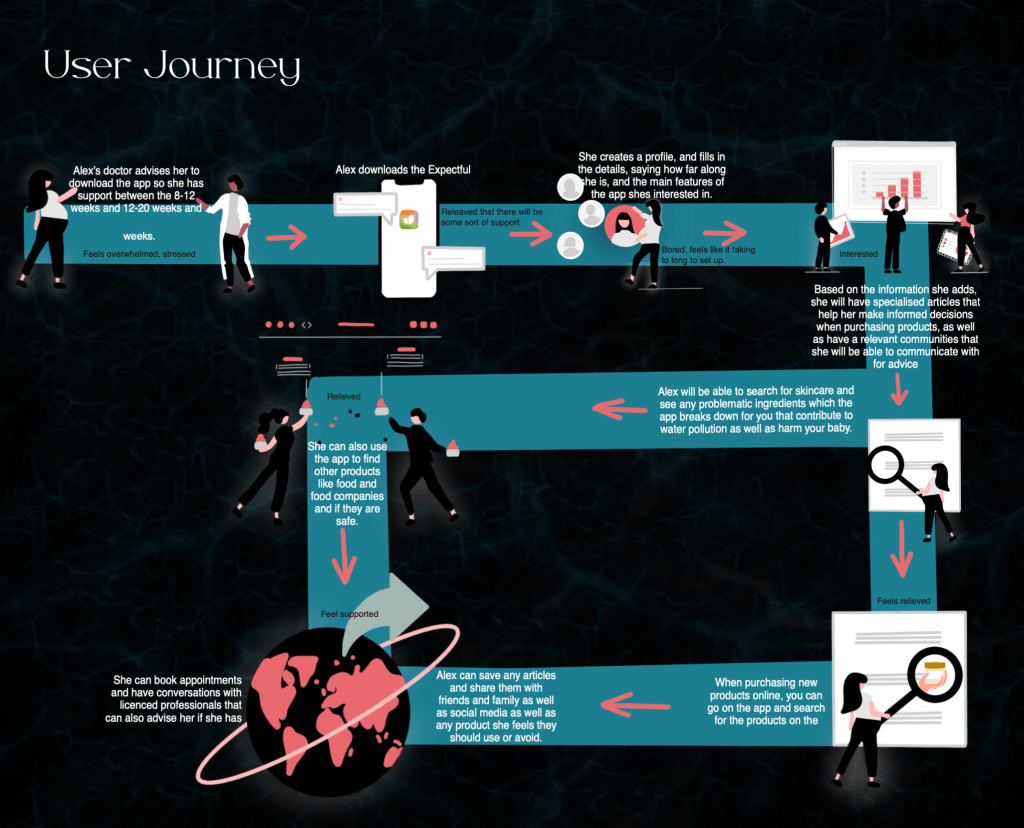
Through my research I found that apps are such a useful way to track what you eat, drink and overall consume. One thing I found was that pregnant women are advised to avoid some chemicals and products but its hard to know which products do or do not contain these chemicals.
For example oxybenzone is know as :
– benzophenone-3 or BP-3
–Milestab 9
–Eusolex 4360
KAHSCREEN BZ-3
So how is the average person expected to know every chemical and its variety of names? My solution was to create a section of an existing and already well established and popular app to help women scan and check If the product they are using is safe and why.
Solution 2- Disruptive
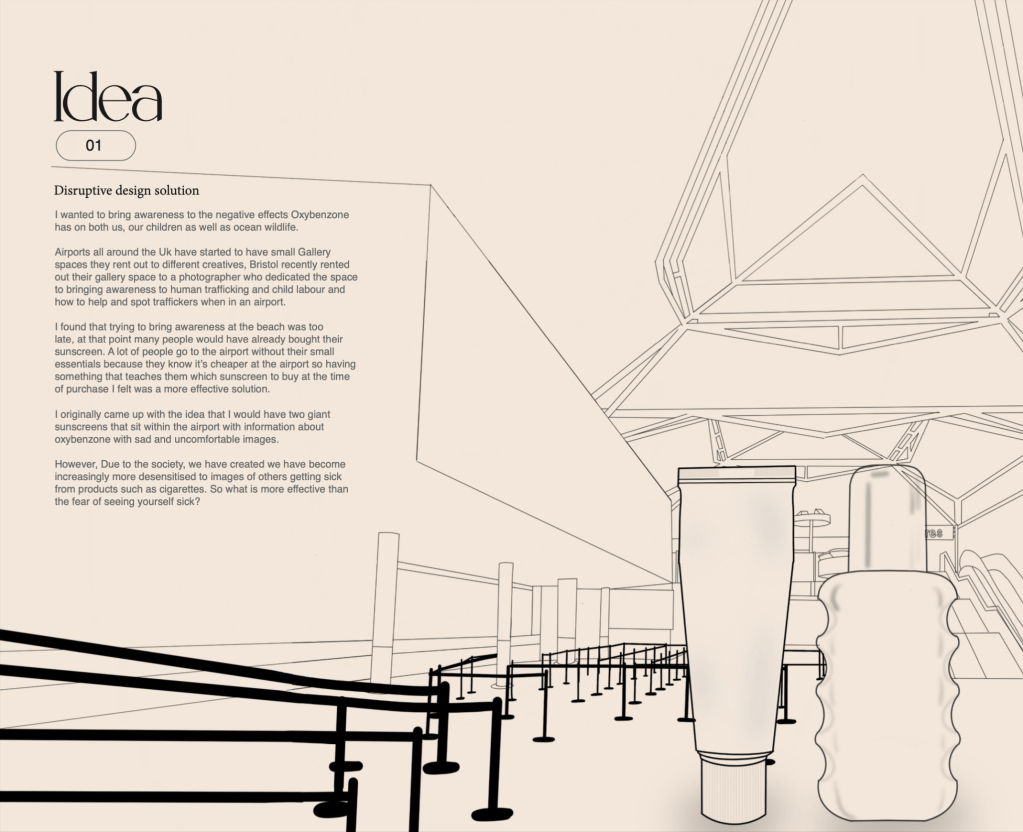
Oxybenzone won’t be banned just because pregnant women stop using it. So for my disruptive design I wanted to rattle the public. Its hard to convince someone to care about others and the environment but they do care about themselves.
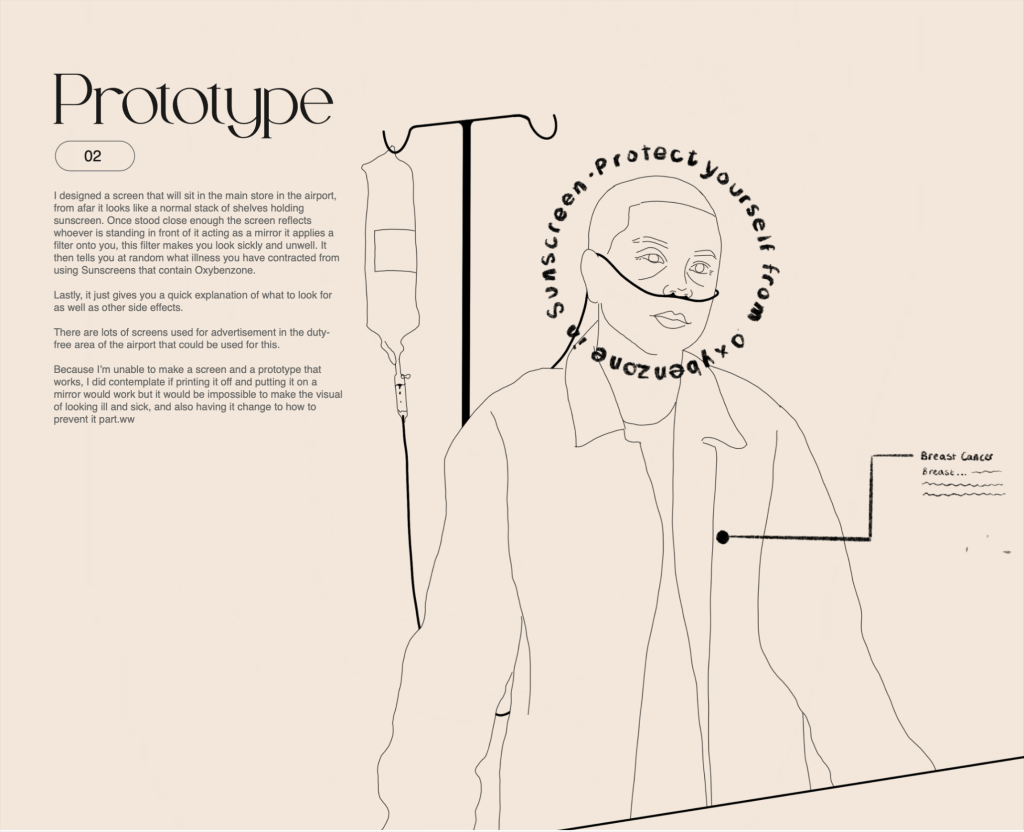
My disruptive solution was to have a screen that was descised often as a part of the shelf of sunscreens but once you stand in front of it it changes. It reflects the person standing in front of it and generates a disease often caused by oxybenzone. With this it reflects the person sick with this disease analysing, what’s wrong with you and why you got It.
This screen would sit in the airport. Why? you often have time to waste, you’re relaxed and in a holiday mood you’re more likely to try and waste time looking around and checking everything out. Unsuspecting that something like this would happen.
This also becomes useful as:
A – Holiday go-ers are often going to a hot country and go and buy sunscreen at the airport due to the liquid restrictions.
B – They are then aware that one of the countries listed that have banned oxybenzone is the country they might be visiting so they won’t buy the wrong one.
C – They will be less likely to buy a sunscreen containing oxybenzone as they are trying to enjoy their time away and not worry about the effects this holiday may have on themselves and their family.
Overall, The outcome of this project was to help the public protect themselves, their future children as well as protect our environment and wildlife.
This project was shortlisted for a Creative Conscious Award.
Section Three- Zine
// Our oceans, teeming with vibrant marine life and delicate ecosystems, face numerous threats. Among these, the impact of oxybenzone—a common ingredient in many sunscreens—on coral reefs is gaining increased attention. Scientific studies reveal that oxybenzone contributes to coral bleaching and the disruption of aquatic life. However, public awareness remains limited, and misconceptions persist, often fueled by misleading information.
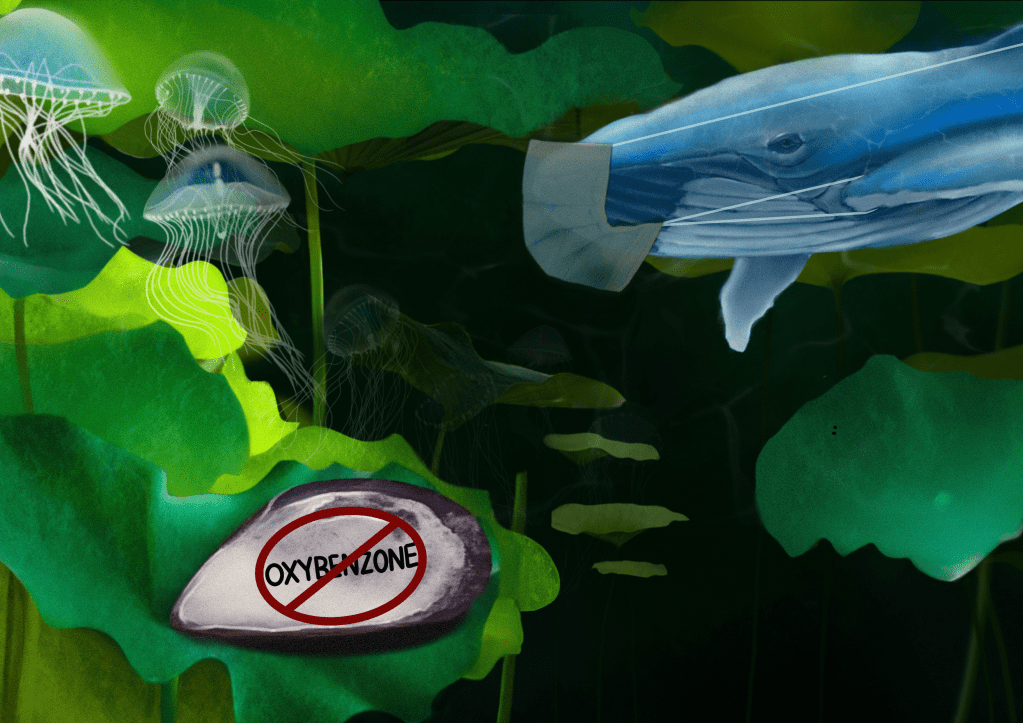
To address this issue, I designed, illustrated, and produced a zine that tells a compelling story to raise awareness about the detrimental effects of oxybenzone on our oceans. The zine follows the journey of a young girl who, influenced by reassuring news reports, believes that oxybenzone poses no harm to marine environments. After applying sunscreen containing oxybenzone, she experiences a magical shrinking and she is transported through her shower drain into the ocean. Here, she witnesses firsthand the devastating effects of oxybenzone as she bleaches the coral around her. Ultimately, she encounters sea creatures donning masks with a sign that says no oxybenzone.
This zine serves as an effective solution for several reasons. First, its illustrated narrative format engages readers emotionally and visually, making the information accessible and memorable. By personifying the issue through the girl’s journey, it helps readers connect with the problem on a personal level. Moreover, the creative storytelling approach transcends age and educational barriers, making it suitable for a wide audience, from children to adults. Through this engaging and educational zine, I hope to spark conversations, inspire action, and contribute to the broader effort of protecting our oceans from harmful substances like oxybenzone.//


 Beatriz Rentes